
Best Branding Services To Invest In For 2026: New Year Business Growth
- 39 min read
- Last updated: July 2, 2026

Written by
Ethan Weston
Growth Marketer
New year, fresh budget, and the same question every business owner ends up asking. Where should this money actually go? There is never enough to cover everything at once, since the website needs work, marketing could be sharper, the logo feels old, and social media never quite gets the attention it deserves.
This means you need to make a genuinely wise choice rather than spreading money thin across everything that feels urgent. Some business owners default to guesswork, picking whatever feels exciting in the moment and hoping it pays off eventually. Smarter owners think in terms of return instead, asking what actually grows the business rather than what simply looks good for a season.
That is exactly what we are walking through today, the best branding investments 2026 has to offer, the places where your money genuinely works rather than just sitting there looking nice. No trends, no guesswork, just smart bets that pay back over time.
WHAT CHANGED IN 2026: THINGS YOU MUST KNOW
Branding looks nothing like it did five years ago, and pretending otherwise costs real money. Customers have grown sharper, having been marketed to constantly enough that they can spot something fake from a mile away, even though a phone screen.
The old formula of a decent logo, a passable website, and a handful of ads simply does not cut it anymore. People now want real connection, brands that feel like actual humans rather than corporations performing humanity, businesses that act consistently and deliver on what they promise.
This shift means your spending needs to move too, away from pure visuals that just sit there looking pretty and toward strategy that genuinely thinks things through. The brands winning in 2026 are not simply the ones people recognize. They are the ones people actually love, and that gap between recognition and love is where real growth lives.
BEST BRANDING INVESTMENTS IN 2026 THAT CAN ALTER YOUR BUSINESS FORTUNE
Here is a detailed walk through the branding services worth investing in this year, starting with the one most business skip entirely.
INVESTMENT 1: BRAND STRATEGY
Most businesses jump straight to logo design, picking colors and fonts before they understand who they are actually speaking to. Strategy needs to come first, always, since it is the genuine thinking behind every visual decision that follows.
A skilled strategist spends real weeks here, on research, interviews, positioning, and messaging, long before anyone sketches a single logo concept. This stage is not glamorous, since you cannot hang it on a wall, but it remains the single most important money you will spend all year. ROI branding genuinely starts here, since strong strategy makes every dollar spent afterward work noticeably harder.
Businesses that skip this step often end up paying for it twice, first for the design work built on guesswork, and again later when that design fails to connect and needs reworking from scratch. A clear strategy document also gives every future hire, contractor, or agency a shared reference point, which keeps decisions consistent even as the people involved in your branding inevitably change over the years.
INVESTMENT 2: LOGO DESIGN
Now comes the part people actually get excited about, though not just any logo will do. Logo design done properly draws on shape psychology, color meaning, and cultural symbolism rather than simply picking something that looks nice on a screen.
The strongest logos work everywhere, tiny on a phone, massive on a billboard, sharp in black and white as much as in full color. Investing in a real designer who understands strategy alongside craft pays off across a decade or more, which spreads the cost down to pennies a day once you do the math.
INVESTMENT 3: BRAND GUIDELINES
This is the boring investment nobody gets excited to buy, yet it quietly saves businesses thousands of dollars over time. Brand guidelines are your rulebook, documenting exactly how to use your logo, which colors belong where, and what your brand voice sounds like across every channel.
Without guidelines, things drift slowly, new employees guess at details, freelancers improvise, and within a year your brand looks slightly different everywhere it appears. With clear guidelines in place, anyone can create something that genuinely feels like you, whether that is a new hire, an outside agency, or simply you are remembering the details months later.
INVESTMENT 4: WEBSITE DESIGN
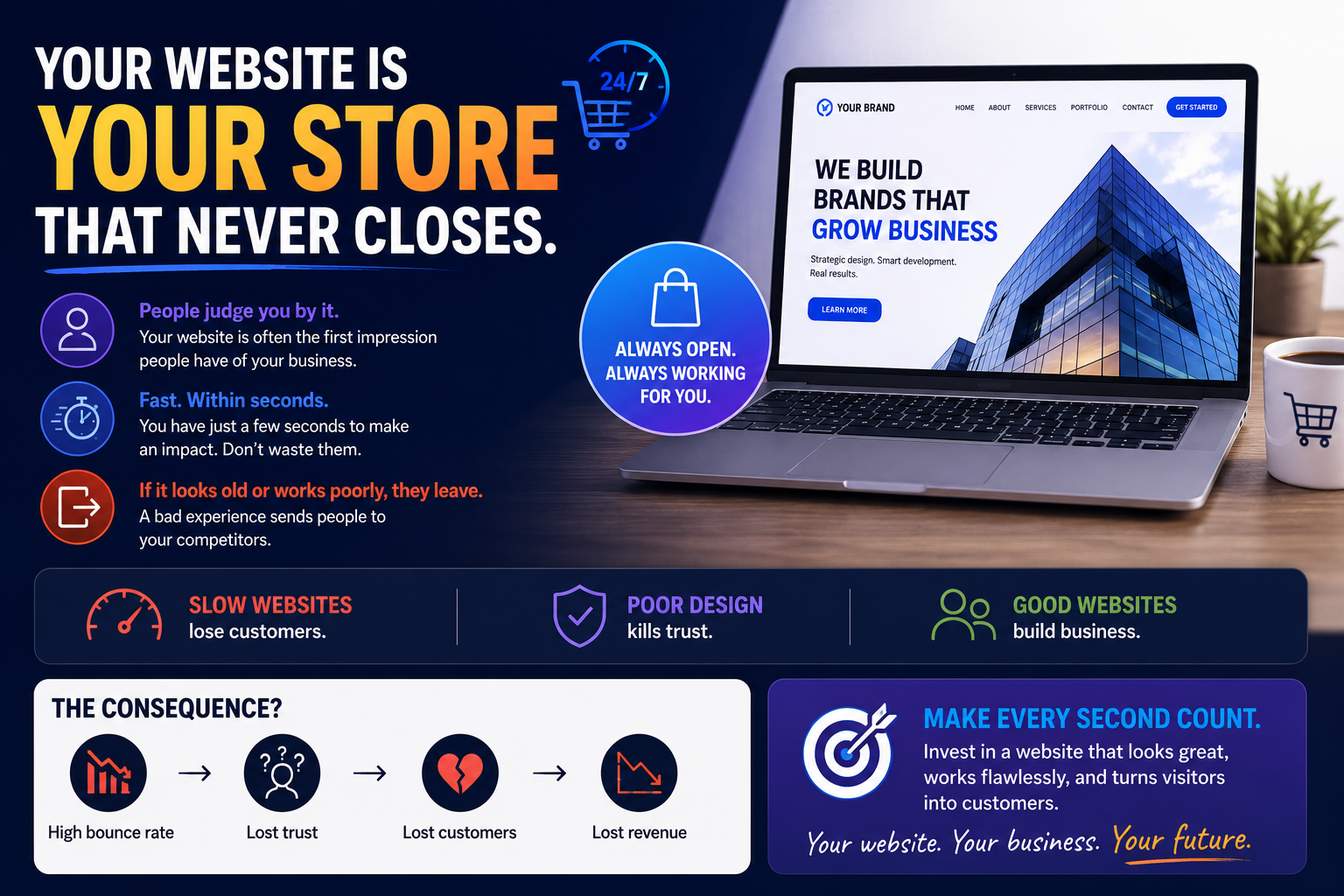
Your website functions as a store that never closes, and people judge it within seconds of arriving. Website design in 2026 needs to prioritize a few specific things that matter more now than ever before.
- Mobile-first layouts, since phones come before desktop screens for most visitors
- Fast loading speed, since every extra second tends to cost you visitors
- Clear messaging that lets people understand what you do immediately
- Easy navigation that lets visitors find what they need without thinking hard
- Strong calls to action that tell people exactly what to do next
A genuinely good site pays for itself continuously, since every customer who finds you, trusts you, and eventually buys from you represents the site quietly doing its job. Beyond the basics, the layout itself needs to reflect how people actually browse on a small screen rather than how a designer might prefer to arrange a desktop page.
This often means rethinking menu structure entirely, trimming unnecessary steps between a visitor landing on a page and actually taking action. A site that looks polished but buries its contact form three clicks deep lose customers it never even realizes it lost, since most people simply leave rather than search harder.
INVESTMENT 5: CONTENT CREATION
Your brand lives largely in what you actually make and share, blog posts, videos, social updates, and emails included. Content creation is how you show up consistently, teach people what you know, and prove you are worth their continued attention.
In 2026, content is no longer optional, since it is how people get to know you long before they ever buy anything from you. The key is strategic content rather than random output, material your actual customers want to see rather than whatever you happen to feel like making that day. Good content builds trust steadily over time, and trust eventually builds sales, which makes the connection between the two genuinely worth taking seriously.
This does not mean producing constant output across every possible format at once, since that pace burns people out fast and quality tends to drop the moment quantity becomes the only goal. A handful of genuinely useful pieces published consistently will outperform a flood of rushed content that nobody finishes reading. Pay attention to what your existing customers actually ask you, since their real questions usually point directly toward the content that will resonate most.
INVESTMENT 6: SOCIAL MEDIA BRANDING
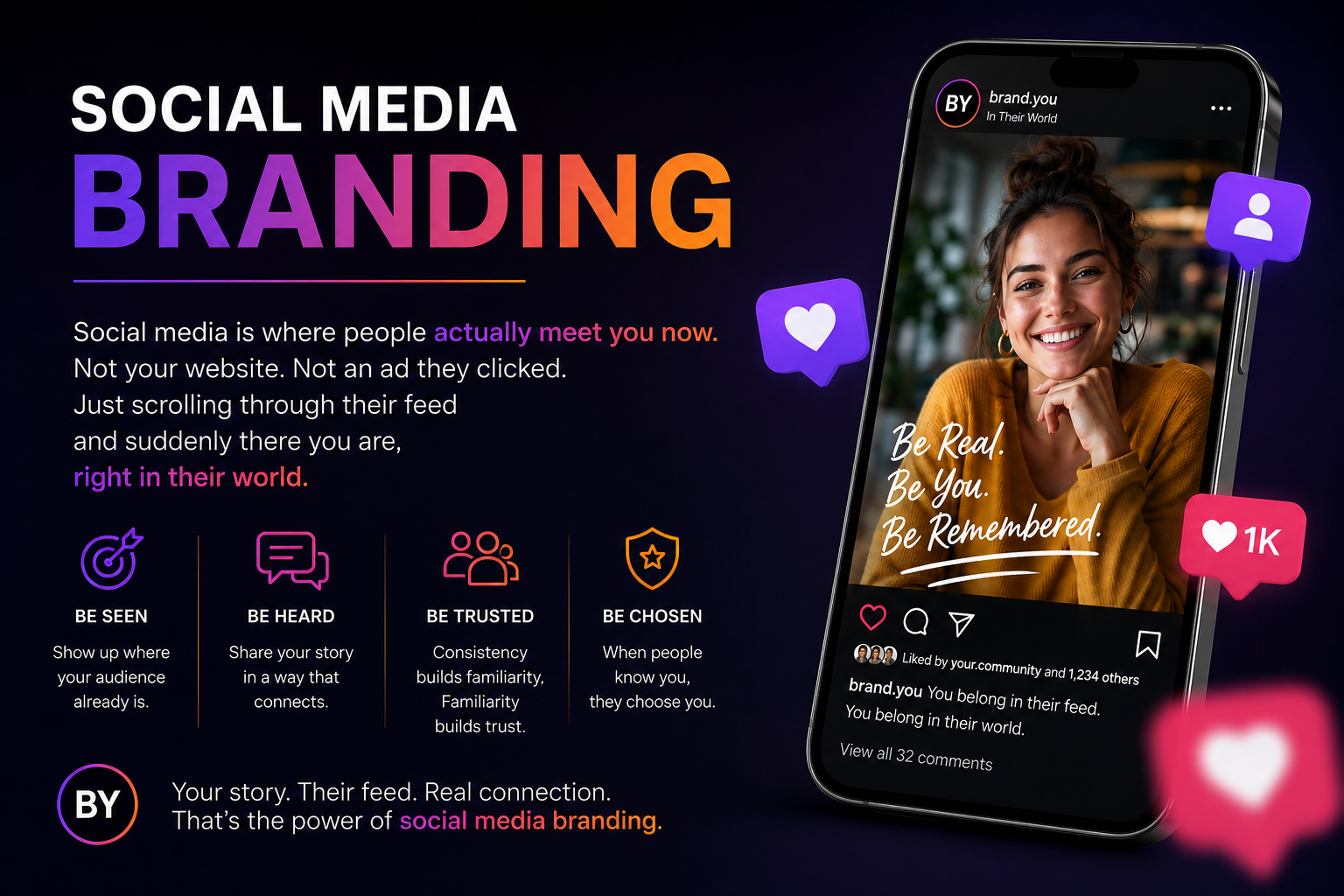
Social media has become where people actually meet a brand for the first time, often while simply scrolling through an unrelated feed. Social media branding means looking like you genuinely belong there, with profile images that hold up at small sizes and posts that feel alive rather than corporate.
This requires showing up consistently across whichever platforms you choose rather than posting sporadically and then disappearing for weeks at a stretch. Consistency tends to matter more than perfection here, since people forget brands that vanish from their feed for long stretches at a time.
Choosing the right platforms in the first place matters just as much as showing up consistently once you are there. A business selling to other companies rarely needs the same platform mix as one selling directly to consumers, and chasing every new app simply because it is trending tends to spread attention thin without building meaningful presence anywhere.
INVESTMENT 7: VIDEO MARKETING
Video keeps winning attention, not because it happens to be trendy, but because people genuinely watch it, remember it, and act on it. Video marketing in 2026 covers a mix of formats working together rather than relying on a single approach.
Short clips under thirty seconds work well for social feeds, while longer videos suit platforms like YouTube where people are looking for more depth. Behind the scenes footage and educational content tend to build connection faster than polished advertisements, since people respond to seeing real people rather than a performance.
INVESTMENT 8: BRAND MESSAGING
What you say matters just as much as how your brand looks visually. Brand messaging covers every word you put out, website headlines, social captions, email subject lines, and what gets said on sales calls.
Strong messaging stays clear enough that people instantly understand what you do, compelling enough that it connects with their actual problems, and consistent enough that your voice stays recognizable everywhere it shows up. Words are cheap to revise but genuinely expensive to get wrong, since weak messaging quietly costs customers every single day it stays uncorrected.
Testing your messaging against real conversations helps more than guessing in isolation ever will. Pay attention to the exact phrases customers use when describing your business to a friend, since their natural language often reveals a sharper, more honest version of your message than anything a brainstorming session alone tends to produce.
INVESTMENT 9: PACKAGING IF YOU SELL PRODUCTS
If your business sells physical products, packaging is prime real estate that should never go to waste. It is the first thing customers physically touch and often the thing they end up photographing for social media, which functions as free advertising when done thoughtfully.
Your packaging should feel like an extension of your brand, matching the same colors and fonts that show up everywhere else, while remaining practical enough to actually protect the product and open easily. Memorable packaging quietly turns regular customers into unpaid marketers, since people genuinely keep nice boxes around and reuse beautiful bags.
INVESTMENT 10: EMAIL MARKETING
Email has been declared dead for roughly two decades now, yet it continues to outperform most other channels by a meaningful margin. People check their inbox daily, often multiple times, and arrive already prepared to read rather than passively scrolling.
Building a genuine list of people who want to hear from you, then sending material worth their time rather than constant sales pitches, keeps you consistently top of mind. When those people eventually need what you offer, they search their inbox and click, which is why email return on investment tends to run remarkably high compared to most other channels available.
Segmenting your list also pays off quickly, since a new subscriber needs different content than someone who has bought from you five times already. Sending the same generic blast to everyone wastes the relationship building potential email offers, while a thoughtfully segmented list lets each message land with the right context for the person reading it.
STARTUP BRANDING PRIORITIES: WHERE TO START
If you are just getting started, attempting everything at once will drain both your money and your energy fast. A clear set of startup branding priorities keeps the early months focused rather than scattered.
Getting these five things solid first matters more than chasing every available channel at once, since you can always layer on more once the foundation is genuinely stable.
It also helps to resist comparing your early stage branding to a competitor who has spent years and a far larger budget building theirs. A startup with tight, well executed basics will consistently outperform one stretched thin trying to match a much larger company feature for feature, since consistency at a smaller scale beats inconsistency at a bigger one almost every time.
BRANDING SERVICES WORTH INVESTING IN!
Not every service delivers equal value and knowing where to lean in versus where to hold back saves real money over time.
Strategy deserves an unqualified yes, since it is the thinking behind everything else and makes every other dollar work harder. Design also earns a clear yes, since professional work builds trust instantly while weak design quietly drives people away. Writing matters just as much, since words sell, convince, and connect in ways visuals alone cannot manage.
Video depends heavily on whether your specific audience actually watches it, since some industries thrive there while others see little return. Social media management comes down mostly to your own time and enjoyment, worth hiring out if you dislike posting and worth doing yourself if you genuinely enjoy showing up. Paid ads earn a conditional yes, but only once your organic foundation already works, since ads amplify what is functioning rather than fixing what is broken.
The general pattern worth remembering is simple. Invest in assets you genuinely own, your website, your content, your email list, your brand itself, and rent only what you do not need to own outright.
ROI BRANDING: MEASURING WHAT MATTERS
How do you actually know whether your branding investments are paying off? It is a fair question, especially once real money starts leaving the budget. Some things are simple to measure, since website traffic, sales figures, and email signups all show up clearly in a spreadsheet over time.
Other things prove far harder to track, since trust does not show up in analytics and brand preference takes time to reveal itself through repeat behavior rather than a single number. ROI branding requires understanding that branding plays a long game, where a strong logo purchased today keeps working for five or ten years afterward.
Do not expect every dollar spent to show up in next month's sales report, since that is simply not how branding tends to function. Quick wins fade quickly, while long-term branding investments compound steadily over time, which is genuinely the entire point of treating brand as an asset rather than an expense.
A useful habit here is checking in on a quarterly rhythm rather than a weekly one, since branding shifts tend to surface gradually rather than overnight. Look at repeat purchase rates, referral patterns, and how often customers mention your brand unprompted, since these softer signals often reveal momentum long before it shows up clearly in a revenue chart.
STARTUP BRANDING PRIORITIES: WHAT NOT TO INVEST IN
A few categories look tempting on the surface yet rarely pay off the way owners expect them to.
- Trendy design choices, since what feels current today often looks embarrassingly dated within a year or two
- Spreading across too many platforms at once, rather than picking two or three where your actual customers spend their time
- Cheap freelancers, since underpriced work tends to get redone eventually, costing more than paying properly the first time
- Random content with no strategic purpose behind it, since posting without a plan generates noise rather than results
- Vanity metrics like follower counts, since likes and followers do not pay bills the way actual customers do
Branding also can never rescue a genuinely weak product, so getting the core offering right always needs to come before pouring money into how it looks and sounds.
BUILDING YOUR BRAND INVESTMENT PLAN
Thinking about spending across years rather than months helps avoid the trap of trying to do everything in one stretch. A reasonable pattern tends to look something like the following across a five year stretch.
- Year one covers strategy, logo, guidelines, a working website, and basic content
- Year two expands content production, adds video, and starts building an email list
- Year three scales whatever channels are clearly working and adds new ones carefully
- Year four refreshes anything that has started feeling tired and doubles down on proven winners
- Year five considers a strategic rebrand only if genuinely needed, otherwise continues building steadily
Every business looks slightly different, but this general pattern holds steady across most of them, building a foundation first, adding layers gradually, and refreshing only when something genuinely calls for it.
FREQUENTLY ASKED QUESTIONS
WHAT IS THE SINGLE MOST IMPORTANT BRANDING INVESTMENT FOR A NEW BUSINESS?
Brand strategy comes first in nearly every case, since it shapes how effectively every later dollar gets spent on design, content, and messaging.
SHOULD A SMALL BUSINESS INVEST IN VIDEO MARKETING RIGHT AWAY?
Only if the target audience genuinely watches video content in that specific industry, since some markets respond far better to written or visual content instead.
HOW LONG DOES IT TAKE TO SEE A RETURN ON BRANDING INVESTMENTS?
Branding tends to pay off gradually over years rather than weeks, with consistent investment compounding steadily rather than producing instant results.
IS IT WORTH PAYING MORE FOR A PROFESSIONAL LOGO INSTEAD OF A CHEAP OPTION?
Yes, since a strategically built logo tends to last a decade or longer, which makes the higher upfront cost genuinely small once spread across that timeframe.
WHAT BRANDING MISTAKE COSTS STARTUPS THE MOST MONEY?
Skipping strategy and jumping straight into design tends to waste the most money, since visuals built without direction rarely connect with the right audience.
LET US HELP YOU INVEST WISELY
The best branding investments 2026 have to offer all start with strategy, then move through logo design that genuinely means something, brand guidelines that keep everything consistent, and website design that actually performs. Content creation builds trust steadily, social media branding keeps you visible, video marketing builds connection quickly, and clear messaging does the quiet work of selling every single day.
Startup branding priorities come down to getting the foundation solid before adding extras, while the branding services genuinely worth investing in are the ones that build assets your business actually owns. Skip the trends, skip the vanity metrics, and put your money toward what genuinely moves the business forward over time.
At The Designers Agency, we do not sell you things you do not need. We help you invest in what actually works for your specific business, keeping the focus firmly on growth rather than simply making things look attractive. You bring the vision, and we bring the expertise to help that vision pay off for years to come.
Table Of Content
WHAT CHANGED IN 2026: THINGS YOU MUST KNOW BEST BRANDING INVESTMENTS IN 2026 THAT CAN ALTER YOUR BUSINESS FORTUNE STARTUP BRANDING PRIORITIES: WHERE TO START BRANDING SERVICES WORTH INVESTING IN! ROI BRANDING: MEASURING WHAT MATTERS STARTUP BRANDING PRIORITIES: WHAT NOT TO INVEST IN BUILDING YOUR BRAND INVESTMENT PLAN LET US HELP YOU INVEST WISELY
Unlocking Digital Prowess through Innovative Solutions and Unparalleled Customer Service.